Keep Your Trees Healthy, Safe, and Looking Great
Professional trimming and pruning for residential and commercial properties across the Dallas-Fort Worth area.
Why Regular Tree Trimming Matters
Trees are tough. They survive Texas heat, ice storms, drought, and 60 mph straight-line winds. But even the hardiest live oak or pecan needs regular maintenance to stay safe and healthy. Neglected trees develop dead branches, weak attachment points, and dense canopies that catch wind like a sail. That is when problems start.
A heavy dead limb over your driveway is not just ugly. It is a liability. One good thunderstorm and that branch comes down on your car, your roof, or worse, someone walking underneath. Regular trimming removes those hazards before they become emergencies. We see it constantly during storm season. The calls we get after a big storm are almost always for trees that had not been touched in years.
Beyond safety, trimming directly impacts tree health. When you remove dead, diseased, or crossing branches, you improve air circulation through the canopy and let more sunlight reach the interior. That reduces fungal issues and promotes stronger growth. Trees that get regular care live longer, plain and simple.
Then there is the curb appeal factor. A well-maintained tree frames your home beautifully. An overgrown, lopsided tree with dead branches sticking out in every direction does the opposite. Real estate agents will tell you that mature, healthy trees add 10 to 15 percent to a property's value. But only if they actually look maintained. A neglected tree can hurt your home's value just as easily as a healthy one helps it.
Here in DFW, we deal with specific challenges that make regular trimming even more important. Our clay soils shift constantly, which stresses root systems. Summer temperatures push past 105 degrees for weeks at a time. And our storm season runs roughly April through June, with hail, high winds, and occasional tornadoes. Trees that go into storm season with heavy, unbalanced canopies are far more likely to lose major limbs or topple entirely.
Types of Tree Trimming
Not all trimming is the same. Different situations call for different techniques, and a good arborist matches the approach to what your tree actually needs. Here are the main types of trimming we perform.
Crown Thinning
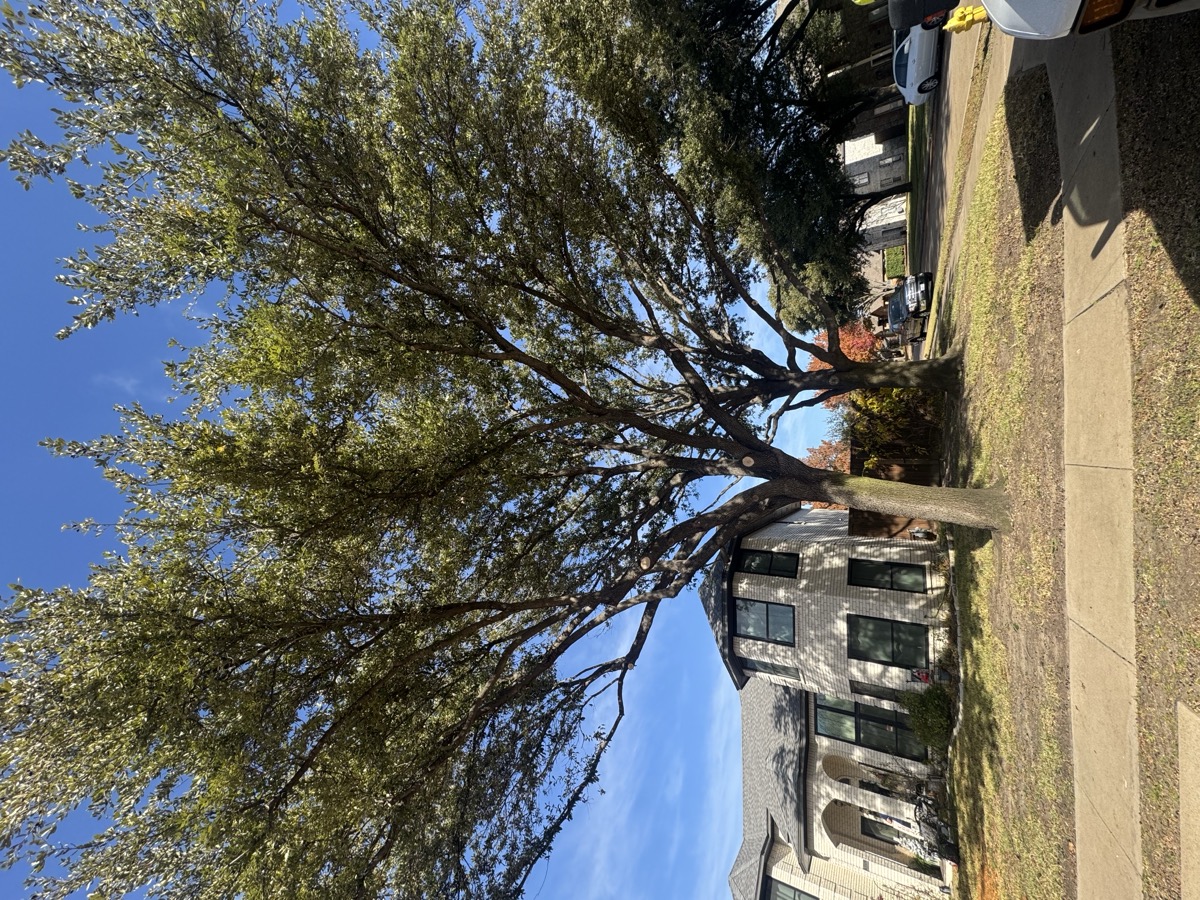
This is the most common type of trimming for mature trees. We selectively remove interior branches to reduce the density of the canopy without changing the tree's overall shape or size. The goal is better air movement and light penetration. A properly thinned canopy also handles wind much better because air passes through instead of pushing against a solid wall of leaves. We typically remove no more than 15 to 20 percent of the live canopy in a single session. Taking more than that stresses the tree.
Crown Raising
Crown raising means removing lower branches to provide clearance. If branches hang over your sidewalk and people have to duck, that is a crown raising situation. Same goes for branches scraping your roof, blocking your driveway, or interfering with street signs. We also do crown raising to let more light reach your lawn or garden beds underneath. It is one of the most immediately noticeable types of trimming because the results are obvious right away.
Crown Reduction
Sometimes a tree has simply gotten too large for its space. Maybe it is growing into power lines, pushing against your house, or blocking a view you want to keep. Crown reduction brings the overall size down by cutting branches back to lateral branches that are large enough to take over as the new terminal growth points. This is very different from topping, which just hacks off the ends of branches at arbitrary points. Proper crown reduction preserves the tree's natural shape while making it smaller.
Deadwooding
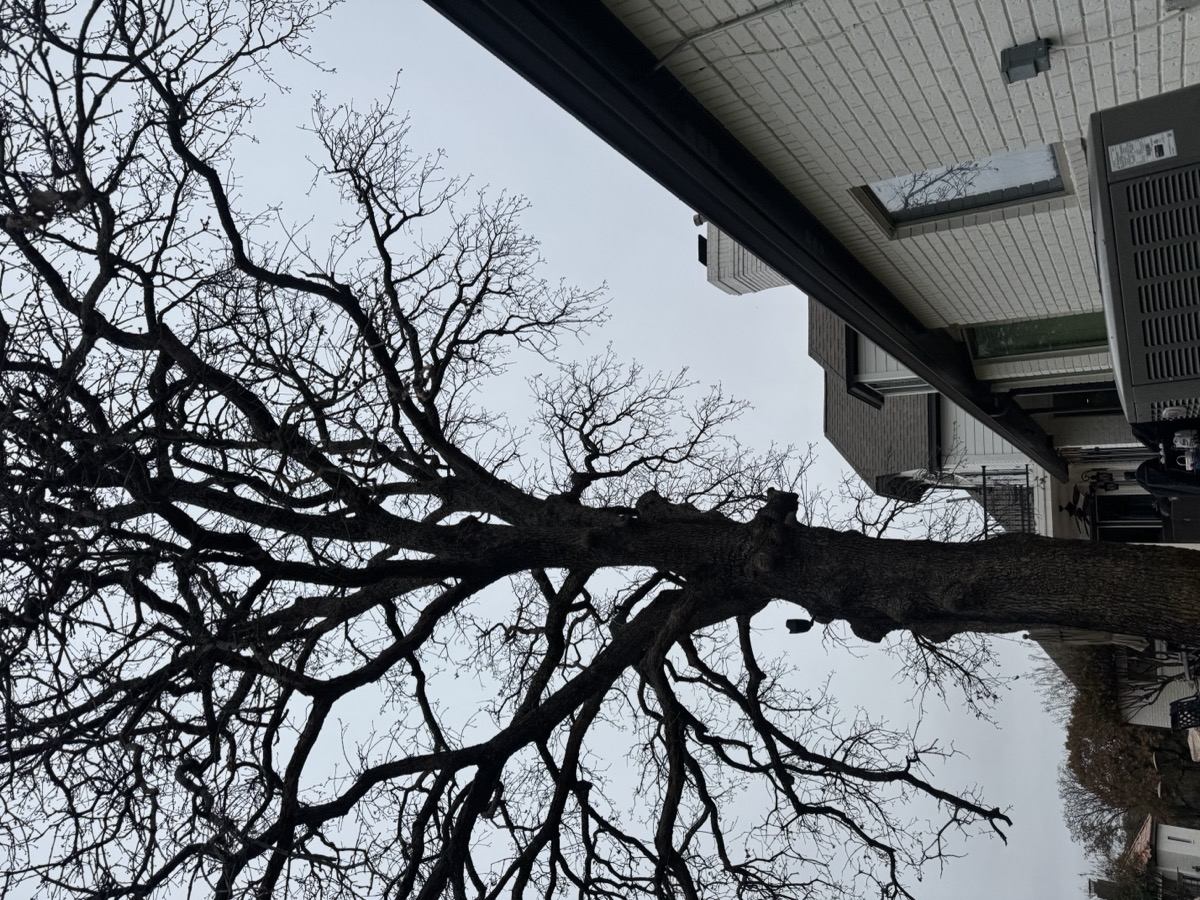
Exactly what it sounds like. We climb through the tree and remove all dead, dying, and broken branches. This is purely a safety and health measure. Dead branches fall eventually. It is just a question of when and what they land on. Deadwooding is especially important for large trees that overhang structures, driveways, patios, or play areas. Even if your tree does not need a full trim, deadwooding every couple of years is smart maintenance.
Vista Pruning
Vista pruning is selective thinning done specifically to create or restore a view. Maybe you bought your house for the lake view and now your trees have grown tall enough to block it entirely. We can thin specific sections of the canopy to open up sight lines while keeping the tree healthy and attractive. It is a balancing act, and it takes an experienced eye to get it right without making the tree look butchered.
How We Trim Your Trees
We do not just show up with a chainsaw and start cutting. Every job starts with an assessment. One of our arborists walks the property with you, looks at each tree, and talks through what needs to happen. We check for dead branches, structural weaknesses, disease signs, and clearance issues. Then we put together a plan and a price.
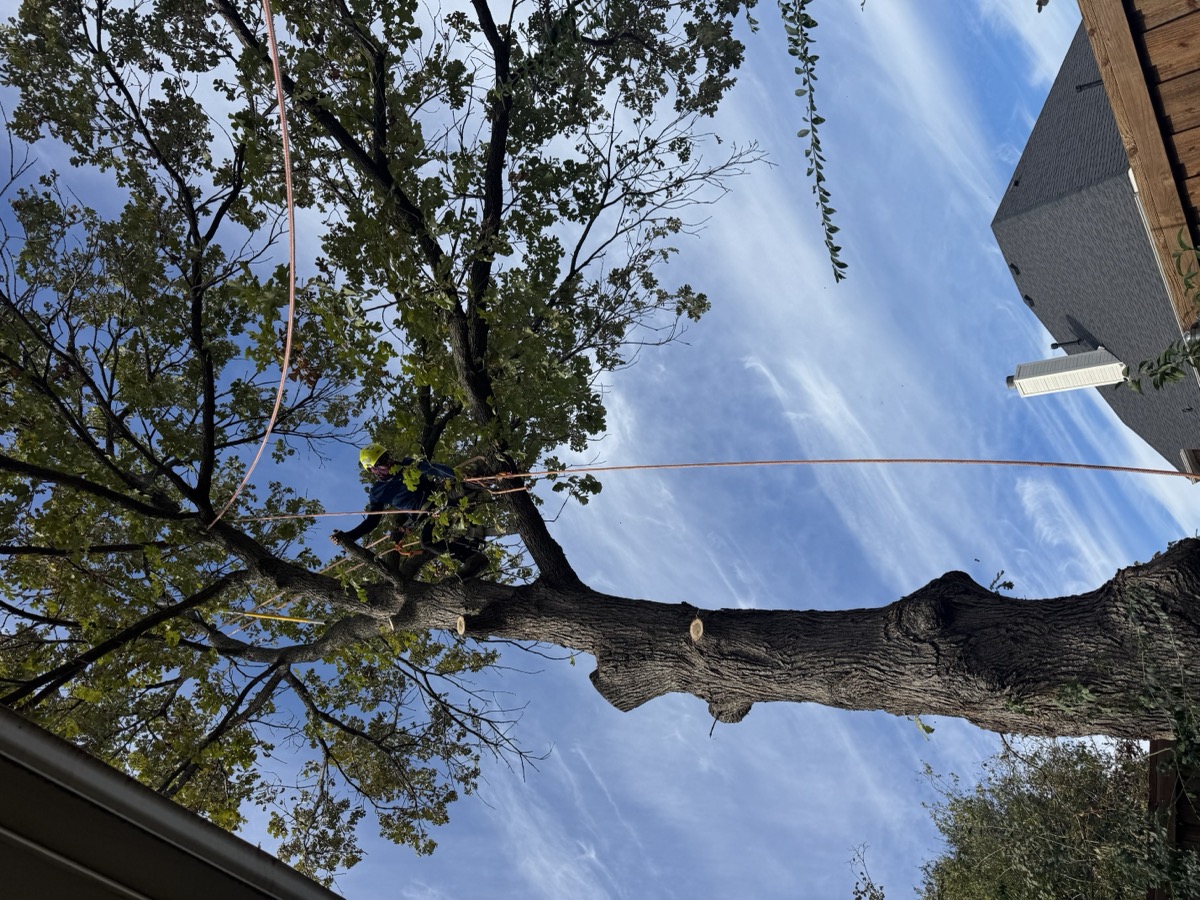
On the day of service, our crew sets up a work zone around the tree. For larger trees, a climber goes up with a harness and hand saws to handle the detail work in the canopy. We use chainsaws for bigger cuts, but a lot of proper pruning work is done with hand tools because they give us more control and create cleaner cuts that heal faster.
Every cut we make follows ISA (International Society of Arboriculture) standards. That means cutting just outside the branch collar, at the right angle, without leaving stubs or tearing bark. Bad cuts invite decay and disease. Good cuts let the tree compartmentalize the wound and heal over cleanly. It sounds like a small detail, but it makes a real difference in how the tree responds.
For branches over structures or in tight spaces, we use rigging to lower sections with ropes rather than letting them free-fall. This protects your property and gives us precise control over where everything goes. Once the trimming is done, we chip all the brush and haul off every piece of debris. You will not find a single twig left behind.
The whole process usually takes a few hours for a single tree, or a full day if we are working on multiple trees or a particularly large specimen. We work efficiently, but we never rush. Cutting corners in tree work means exactly that, and it shows for years afterward.
When to Trim
Timing matters more than most people realize, especially here in North Texas. The general rule is that most trees should be trimmed during the dormant season, which runs roughly late December through February in our area. During dormancy, trees are not actively growing. They handle pruning stress better, and you can see the branch structure clearly without leaves in the way.
Oak trees deserve special attention when it comes to timing. Oak wilt is a serious fungal disease that has been spreading through DFW, and the beetles that carry it are attracted to fresh pruning wounds. The highest risk period is February through June. We strongly recommend trimming oaks only during the coldest months, ideally December and January, when beetle activity is lowest. If an oak must be pruned during warmer months due to a safety hazard, we immediately seal the cuts with pruning paint to prevent beetle access.
Spring-flowering trees like redbuds, dogwoods, and crape myrtles are best trimmed right after they finish blooming. If you trim them during winter, you cut off the flower buds that were set the previous fall and you will miss an entire season of blooms.
Pecan trees, which are everywhere in DFW, do well with winter pruning. They are one of the last trees to leaf out in spring, so you have a long dormant window to work with. Just get the trimming done before bud break in late March or early April.
The one exception to all of this is dead or hazardous wood. If a branch is dead, broken, or actively threatening a structure, remove it immediately. Do not wait for the "right" season. Safety always comes first.
Summer trimming is sometimes necessary but should be kept to a minimum. Trees are under enough stress dealing with Texas heat and occasional drought. Adding pruning stress on top of that is not ideal. Light maintenance trimming is fine, but heavy structural work should wait for winter when possible.
Why Topping is Bad
Let us be direct about this. Topping is the worst thing you can do to a tree. If someone knocks on your door and offers to "top" your trees, say no. If a company recommends it, find a different company. It is that simple.
Topping means cutting the main branches or trunk back to stubs, usually to reduce the tree's height quickly. People do it because they think a shorter tree is a safer tree. The reality is the exact opposite.
When you top a tree, it responds by producing dozens of thin, weakly attached sprouts from each stub. These sprouts grow fast because the tree is desperate to replace its lost leaf area. Within a few years, the tree is the same height it was before, but now the branches are far weaker. They are attached to the surface of the stubs rather than embedded in the branch structure the way natural limbs are. Those weak attachments are the ones that fail during storms.
Topping also removes a massive percentage of the tree's leaf area all at once, which starves the tree. Leaves are how trees make food. Remove most of them and the tree burns through its energy reserves trying to recover. This weakens the tree's immune system and opens the door to disease and insect infestation. Many topped trees die within 5 to 10 years.
There is also the appearance factor. A topped tree looks terrible. The natural form is destroyed and replaced by a cluster of spindly shoots growing from ugly stubs. It never looks normal again. And since topped trees eventually grow back to their original size anyway, you have not actually solved the height problem. You have just created a weaker, uglier version of the same tree.
If a tree genuinely needs to be made smaller, crown reduction is the correct technique. If a tree is simply too large for its location and cannot be safely reduced, removal and replacement with an appropriate species is the honest answer. Topping is never the right call.
Frequently Asked Questions
Tree trimming costs in the Dallas-Fort Worth area typically range from $250 to $1,500 per tree, depending on size, species, location, and the type of trimming needed. Small ornamental trees cost less, while large oaks or pecans that require climbing and rigging run higher. We provide free on-site estimates so you know exactly what to expect.
For most trees in North Texas, the best time to trim is during the dormant season, roughly late December through February. Oak trees should only be pruned during the dormant months to reduce the risk of oak wilt. However, dead or hazardous branches should be removed immediately regardless of season.
Most mature trees benefit from professional trimming every 3 to 5 years. Younger trees that are still being shaped may need attention every 2 to 3 years. Fast-growing species like cottonwoods or silver maples often need more frequent care. Your arborist can set up a maintenance schedule based on your specific trees.
Proper trimming actually improves tree health. The key word is proper. When done correctly by a trained arborist, trimming removes dead and diseased wood, reduces wind resistance, and encourages strong growth patterns. Bad trimming, like topping or over-pruning, absolutely does hurt trees. That is why hiring a qualified crew matters so much.
In most DFW cities, you do not need a permit for routine trimming on your own property. However, some municipalities have protected tree ordinances that regulate significant pruning or removal of certain species or sizes. For example, Fort Worth and Dallas both have tree preservation ordinances. We handle the permit process when one is needed.
Related Services
Serving Every DFW Community
Green Image provides this service across the Dallas–Fort Worth metroplex. Find local tree care in your city: