Tree Health Assessments for DFW Homeowners and Properties
Catch problems early. Our experienced arborists evaluate your trees and give you a clear plan of action.
Most people don't think about their trees until something goes wrong. A big limb falls in the yard. The leaves turn brown in July. Mushrooms show up at the base of the trunk. By the time you notice these things, the problem has usually been building for months or even years.
A professional arborist inspection catches issues when they're still manageable. Our trained professionals walk your property, evaluate every tree, and tell you exactly what's going on. No guesswork, no vague advice. You get specific answers about each tree's health and what needs to happen next.
We see a lot of trees in the DFW area that could have been saved if someone had caught the early signs. A post oak in Keller with hypoxylon canker that was already too far gone by the time the homeowner called. A row of red oaks in Plano where oak wilt had jumped from one tree to the next because nobody identified it in the first tree. These situations are preventable, but only if you know what to look for.
That's what our inspections are about. Getting ahead of the problem instead of reacting to it.
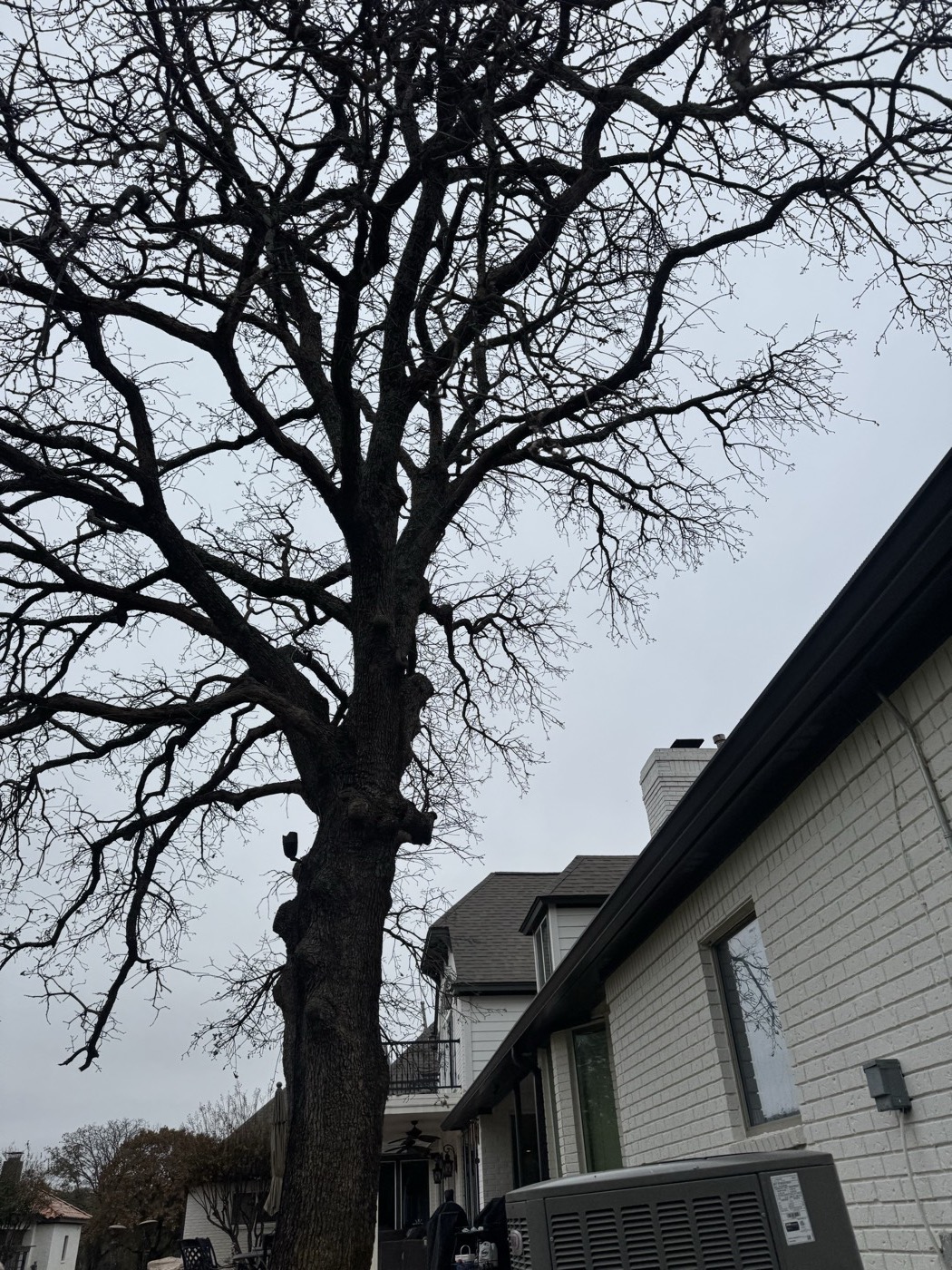
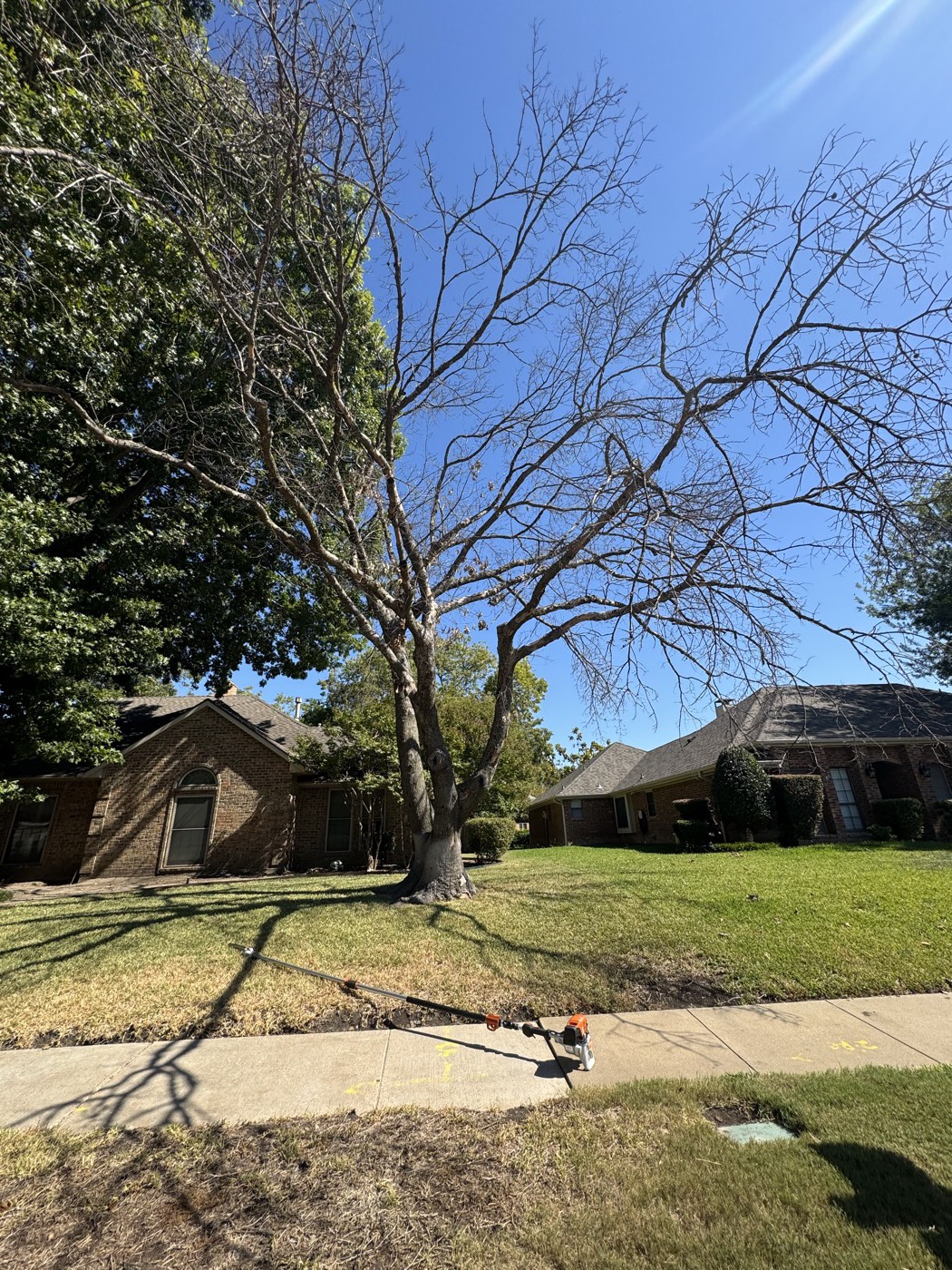
What an Arborist Inspection Includes
Our inspections are thorough. We don't just glance at your trees and tell you they look fine. We go through a detailed evaluation process that covers every part of the tree, from the roots to the top of the canopy.
Visual Assessment of the Whole Tree
We start by stepping back and looking at the tree as a whole. How does the crown look? Is it full and balanced, or are there thin spots and dead branches? Is the tree leaning? Is the growth pattern normal for the species? A trained eye can pick up a lot just from standing back and studying the overall shape and density of the canopy.
Canopy and Branch Health
We look closely at the leaves and branches. Leaf size, color, and density tell us a lot about what's happening underground and inside the trunk. Yellowing leaves in the middle of summer might point to a nutrient deficiency, root stress, or disease. Dead branches scattered through the canopy could mean the tree is losing vascular function. We also check for crossing branches, included bark, and weak branch attachments that could fail in a storm.
Trunk Inspection
The trunk is the backbone of the tree, and it's where a lot of problems show up. We check for cracks, cavities, cankers, peeling bark, and signs of decay. Fungal fruiting bodies like conks or shelf mushrooms growing on the trunk almost always mean internal rot. We also look at the trunk flare at ground level. If the flare is buried under soil or mulch, the tree may be developing girdling roots or bark decay at the base.
Root Zone Evaluation
Roots are responsible for anchoring the tree and delivering water and nutrients, so root health directly impacts everything above ground. We look for heaving soil, exposed roots showing signs of decay, circling roots that are choking the trunk, and damage from construction, grading, or soil compaction. In many DFW neighborhoods, root problems are the number one cause of tree decline because of how much development has happened in the last 20 years.
Soil Conditions
North Texas soils are tricky. Most of the DFW area sits on heavy clay that shrinks and swells dramatically with the seasons. This movement puts constant stress on root systems. We check for signs of drainage problems, compaction, improper mulching, and pH issues that could be limiting nutrient uptake. Trees growing in highly alkaline clay soils often develop iron chlorosis, which shows up as yellow leaves with green veins. It's very common in Arlington, Fort Worth, and the mid-cities.
Common Tree Diseases in North Texas
The DFW climate creates ideal conditions for several serious tree diseases. Here are the ones we see most often during inspections.
Oak Wilt
This is the big one. Oak wilt is caused by a fungus that blocks the tree's water-conducting vessels, and it kills red oaks fast. A healthy Shumard oak can go from full canopy to completely dead in three to six weeks once symptoms appear. Live oaks are more resistant but still susceptible, and the disease spreads through root grafts between nearby oaks. We've seen it wipe out entire streets of red oaks in Dallas neighborhoods. Early detection is critical because there are treatments that can save surrounding trees if you act quickly.
Hypoxylon Canker
Hypoxylon is an opportunistic fungus that attacks trees already weakened by drought, root damage, or other stress. It shows up as patches of dark, crusty fungal growth on the bark, usually after the bark starts peeling off in sheets. By the time you see hypoxylon, the tree is usually too far gone. But an inspection can identify the underlying stress that makes a tree vulnerable to it, so you can intervene before the fungus takes hold.
Cotton Root Rot
This soil-borne fungus thrives in the alkaline clay soils common across the DFW area. It attacks the roots and can kill a mature tree in a matter of weeks during hot summer months. The frustrating thing about cotton root rot is that the tree often looks perfectly healthy until it suddenly wilts and dies. Our inspections look for the early warning signs in the soil and root zone that suggest a tree may be at risk.
Bacterial Leaf Scorch
BLS is caused by the bacterium Xylella fastidiosa, which is spread by leafhopper insects. It causes a distinctive browning pattern on the leaf margins, starting at the tips and edges and working inward. It primarily affects red oaks, live oaks, and elms in our area. BLS is chronic and progressive. There's no cure, but proper management can extend the life of affected trees significantly. The key is confirming the diagnosis early so a management plan can start before the tree has declined too far.
Common Tree Pests in DFW
Insects are another major threat to trees in North Texas, and some of them are relatively new to the area.
Emerald Ash Borer
EAB was first confirmed in North Texas in 2018, and it has been spreading steadily since. This invasive beetle lays eggs on ash trees, and the larvae bore into the bark and feed on the cambium layer, cutting off the tree's ability to transport water and nutrients. It has killed hundreds of millions of ash trees across the eastern United States, and it is now an active threat here. If you have ash trees on your property, an inspection can determine if they're showing early signs of EAB infestation and whether preventive treatments make sense.
Tent Caterpillars and Webworms
These show up every year in DFW, usually in late summer and fall. You'll see their silky webs covering branch tips throughout neighborhoods in McKinney, Frisco, and Flower Mound. The good news is that healthy, mature trees usually tolerate webworm damage without long-term problems. But young trees or trees already dealing with other stress can take a real hit. Our inspection will tell you if treatment is necessary or if the tree can handle it on its own.
Aphids
Aphids are tiny but they show up in huge numbers, especially on crepe myrtles and pecans. They feed on sap and leave behind a sticky residue called honeydew that turns black with sooty mold. Beyond being ugly, heavy aphid infestations over multiple seasons can weaken a tree. We check for aphid damage during inspections and can recommend treatment options if the population is getting out of hand.
Borers
Several species of boring insects are active in North Texas, including flatheaded borers that target stressed oaks and elms. Borers create tunnels under the bark that disrupt the flow of water and nutrients. You might notice small holes in the bark or sawdust-like material (called frass) at the base of the tree. Trees that are healthy and well-watered are much more resistant to borer attacks, which is one more reason regular inspections and proactive care matter.
When to Get a Tree Inspection
You don't have to wait until something looks wrong. In fact, the best time to inspect is before there's an obvious problem. Here are the most common situations where an inspection really pays off.
Buying a New Home
Your home inspector probably won't say much about the trees. But a large tree with internal decay or a root system that's been compromised by past construction could cost you thousands of dollars down the road. We regularly inspect properties in Southlake, Allen, and Frisco for buyers who want to know what they're getting into before closing. Think of it like a home inspection, but for the trees. A mature oak or pecan tree adds real value to a property, and knowing its condition before you buy is just smart.
After Storms
Spring storms in DFW can be brutal. High winds, hail, lightning, and heavy rain all do damage to trees. Some of that damage is obvious: broken branches, split trunks, trees leaning at new angles. But a lot of storm damage is hidden. Internal cracks, root disruption from soil saturation, and stress injuries that won't show symptoms for months. If your property took a hit during a storm, an inspection identifies the damage you can't see and helps you prioritize what needs attention first.
Signs of Decline
If a tree starts looking off, don't ignore it. Leaves that are smaller than usual, a canopy that's thinner than it was last year, bark peeling in unusual patterns, mushrooms at the base. These are all signals that something is wrong. The sooner you get an inspection, the more options you'll have. A lot of tree problems are treatable if caught early. Wait too long and removal becomes the only option.
Before Construction Near Trees
Planning a new driveway, pool, addition, or fence line? If the work will happen within the drip line of a mature tree, you need to know how to protect it. Root damage from trenching and soil compaction from heavy equipment are the two biggest killers of trees during construction projects. An inspection before the work starts lets us map out root zones, recommend protective barriers, and advise the contractor on how to work around the tree without destroying it. We see this a lot in the older neighborhoods of Arlington and Fort Worth where homeowners are adding on to existing houses.
What You Get After the Inspection
An inspection isn't very useful if you walk away without a clear understanding of what was found and what to do about it. That's why we put everything in writing.
Written Report
You'll receive a detailed report covering every tree we inspected. Each tree gets its own entry with the species identification, size, current health rating, and a description of any problems we found. We include photos to document issues so you have a visual record. If you need the report for an insurance claim, real estate transaction, or permit application, it's all documented and professional.
Treatment Plan
For trees with active problems, we provide specific treatment recommendations. That might include fungicide injections for oak wilt, soil amendments for nutrient deficiencies, insecticide treatments for borers, or structural pruning to address weak attachments. We explain what each treatment does, how long it takes to work, and what kind of results you can expect. We also let you know if a tree is beyond saving so you can plan for removal rather than spending money on treatments that won't help.
Maintenance Schedule
Healthy trees still need regular attention. We'll put together a maintenance schedule tailored to your property, including when to prune, when to fertilize, how to water during drought, and how to mulch properly. Most people in North Texas don't water their trees enough during summer, and they mulch way too deep. A good maintenance schedule prevents a lot of the problems we find during inspections.
Why Regular Inspections Matter in North Texas
The DFW area is tough on trees. The combination of heavy clay soil, extreme summer heat, periodic drought, and violent spring storms creates a constant cycle of stress. Add in the pests and diseases that thrive in our climate, and it's a lot for a tree to handle.
Regular inspections, ideally once a year, keep you ahead of these challenges. They catch diseases in the early stages when treatment is still effective. They identify structural weaknesses before a storm turns them into emergencies. And they help you make informed decisions about which trees to invest in and which ones need to come down.
We work with homeowners across Arlington, Dallas, Fort Worth, Keller, Southlake, McKinney, Frisco, Allen, Plano, and Flower Mound. Our experienced arborists know the trees that grow here, the problems they face, and how to keep them healthy in this climate. If it's been a while since anyone looked at your trees, give us a call at 817-779-1365. We'll set up a time to come out and take a thorough look at everything on your property.
Frequently Asked Questions
It depends on the size of your property and how many trees need to be evaluated. A basic inspection of a few trees in a residential yard is very affordable. Larger properties with dozens of trees or commercial sites will cost more due to the time involved. Call us at 817-779-1365 and we can give you a ballpark over the phone before scheduling.
We recommend an annual inspection for most properties. Trees change slowly, and annual visits let us track trends in health and catch new problems early. If you have trees that are being treated for disease or pest issues, more frequent check-ins may be needed to monitor progress. Properties with very young or very old trees also benefit from more regular attention.
Absolutely. Pre-purchase tree inspections are one of our most popular services. We'll evaluate every tree on the property and give you a written report that covers their health, any problems we find, and estimated costs for any recommended work. This gives you real negotiating power and prevents expensive surprises after you've already closed on the house.
A free estimate is focused on a specific job you already know you need, like trimming a tree or removing a stump. An arborist inspection is a comprehensive health evaluation of your trees. It's more detailed, takes more time, and results in a written report with findings and recommendations. Think of the estimate as a quote for a specific service, and the inspection as a full checkup.
Yes, and we'll explain exactly why. We never recommend removing a tree unless it's truly necessary. If a tree can be saved with treatment, pruning, or better maintenance practices, we'll tell you that. If it's too far gone or poses a safety risk, we'll be honest about that too. Our goal is to give you accurate information so you can make the best decision for your property.
Related Services
Serving Every DFW Community
Green Image provides this service across the Dallas–Fort Worth metroplex. Find local tree care in your city: