Professional Tree Planting in DFW
The right tree in the right spot makes all the difference. We help you choose the best species for your property and plant it the right way.
Planting a Tree Is an Investment That Lasts Decades
A well-chosen, properly planted tree will outlive most things on your property. It'll shade your home, cut your energy bills, increase your property value, and look better every single year. But a tree planted in the wrong spot, or the wrong species for our climate, can turn into an expensive problem down the road.
That's where we come in. Green Image Tree Service doesn't just dig a hole and stick a tree in it. We evaluate your soil, assess your site conditions, help you pick a species that actually thrives in North Texas, and plant it using techniques that give the tree the best possible start.
Choosing the Right Tree for North Texas
North Texas is a tough place to be a tree. We get brutal summer heat, unpredictable freezes, heavy clay soils, and drought conditions that can last for months. Not every tree can handle that. The ones that do well here are species that have adapted to these conditions over thousands of years, or cultivars that have been specifically selected for heat and drought tolerance.
Here are the trees we recommend most often for DFW properties:
Live Oak
If you could only plant one tree in North Texas, this would be it. Live Oaks are tough, long-lived, and they keep their leaves through winter (they're semi-evergreen, dropping old leaves in spring just as new ones come in). They develop a broad, spreading canopy that provides incredible shade. A mature Live Oak in your front yard can add serious value to your home. They handle our clay soils well, tolerate drought once established, and they're resistant to most diseases. The one downside is they grow moderately slow, so plant one sooner rather than later.
Cedar Elm
This is the native elm of North Texas, and it's perfectly adapted to our conditions. Cedar Elms tolerate the heat, handle both wet and dry soil, and grow at a reasonable pace. They develop a nice vase shape and provide good shade. Unlike their cousin the American Elm, Cedar Elms have strong resistance to Dutch Elm Disease. They're one of the most reliable shade trees you can plant in this area.
Bur Oak
Bur Oaks are massive, stately trees that can live for hundreds of years. They have thick, corky bark that makes them surprisingly fire-resistant and drought-tolerant. The acorns are huge and attract wildlife. If you have the space for a large shade tree and you're thinking long-term, a Bur Oak is hard to beat. They need room though, so plan for a mature spread of 60-80 feet.
Red Oak (Shumard and Texas Red)
If you want fall color in North Texas, Red Oaks are your best bet. Shumard Red Oaks in particular put on a great show in November, with leaves turning deep red and crimson. They grow faster than most oaks, have a strong central leader, and develop into tall, well-shaped shade trees. Texas Red Oak is a smaller native variety that works well in tighter spaces or as an understory tree.
Pecan
The state tree of Texas, and for good reason. Pecans grow large, provide dense shade, and produce nuts that squirrels (and people) love. They're native to the river bottoms of North Texas and do especially well in deeper soils with decent moisture. They can struggle in shallow, rocky clay, so site selection matters. If your soil is right for them, a Pecan tree is one of the most rewarding trees you can plant.
Crape Myrtle
Technically a large shrub or small tree, but Crape Myrtles are one of the most popular plantings in DFW for good reason. They bloom all summer in shades of pink, red, purple, and white. They're extremely heat-tolerant, drought-resistant once established, and they come in sizes that fit any yard. Just make sure you pick the right variety for your space. A Natchez Crape Myrtle will reach 30 feet, while a Pocomoke tops out at 3 feet. And please, don't let anyone "top" your Crape Myrtles. That's called Crape Murder, and it's bad for the tree.
Understanding DFW Soils
Soil is everything when it comes to tree planting in this area. Most of the DFW metroplex sits on heavy clay soil, and that affects everything about how you plant and care for trees.
Clay soil holds water well, which sounds like a good thing until you realize it also drains poorly. After a heavy rain, clay stays saturated for days. During drought, it shrinks and cracks, pulling away from roots and foundations. This wet-dry cycle puts stress on trees and can cause root damage over time.
In parts of Keller, Southlake, and the northern suburbs, you'll find areas with more sandy loam or rocky limestone soils. These drain faster but hold less moisture and fewer nutrients. The planting approach is different for each soil type.
Before we plant, we assess your soil conditions. We look at drainage, depth, composition, and pH. This tells us which species will do best on your specific site and whether we need to amend the soil at planting time. Sometimes a tree that would struggle in one part of your yard will thrive 50 feet away where the soil is slightly different.
How We Plant Trees the Right Way
There's a right way and a wrong way to plant a tree, and the difference shows up years later. Here's our process:
Site assessment. We look at sun exposure, soil type, drainage patterns, proximity to structures and utilities, and the mature size of the tree you're considering. A tree that looks great at 8 feet tall in a container might reach 60 feet and spread over your neighbor's roof in 20 years. We plan for the long term.
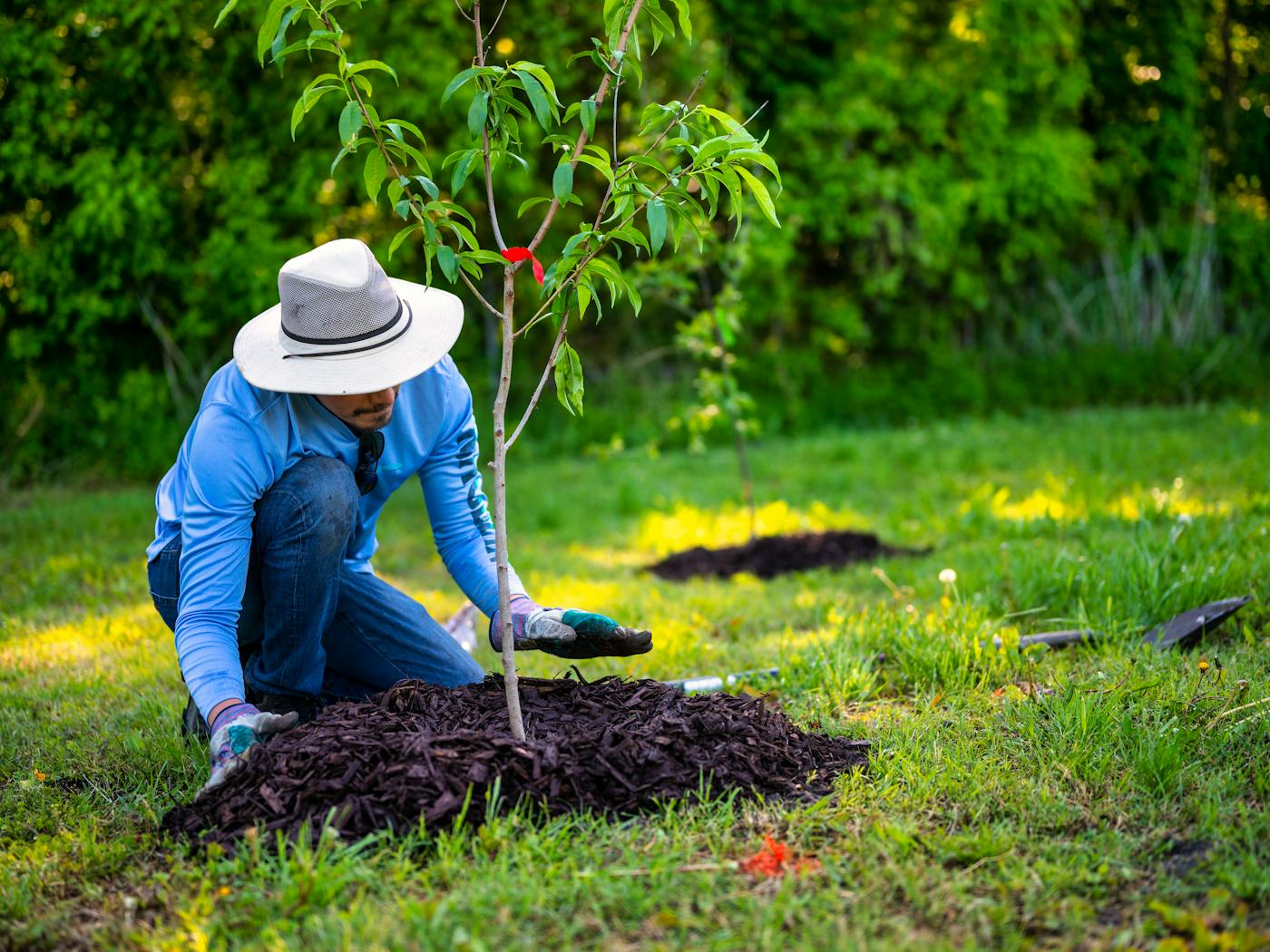
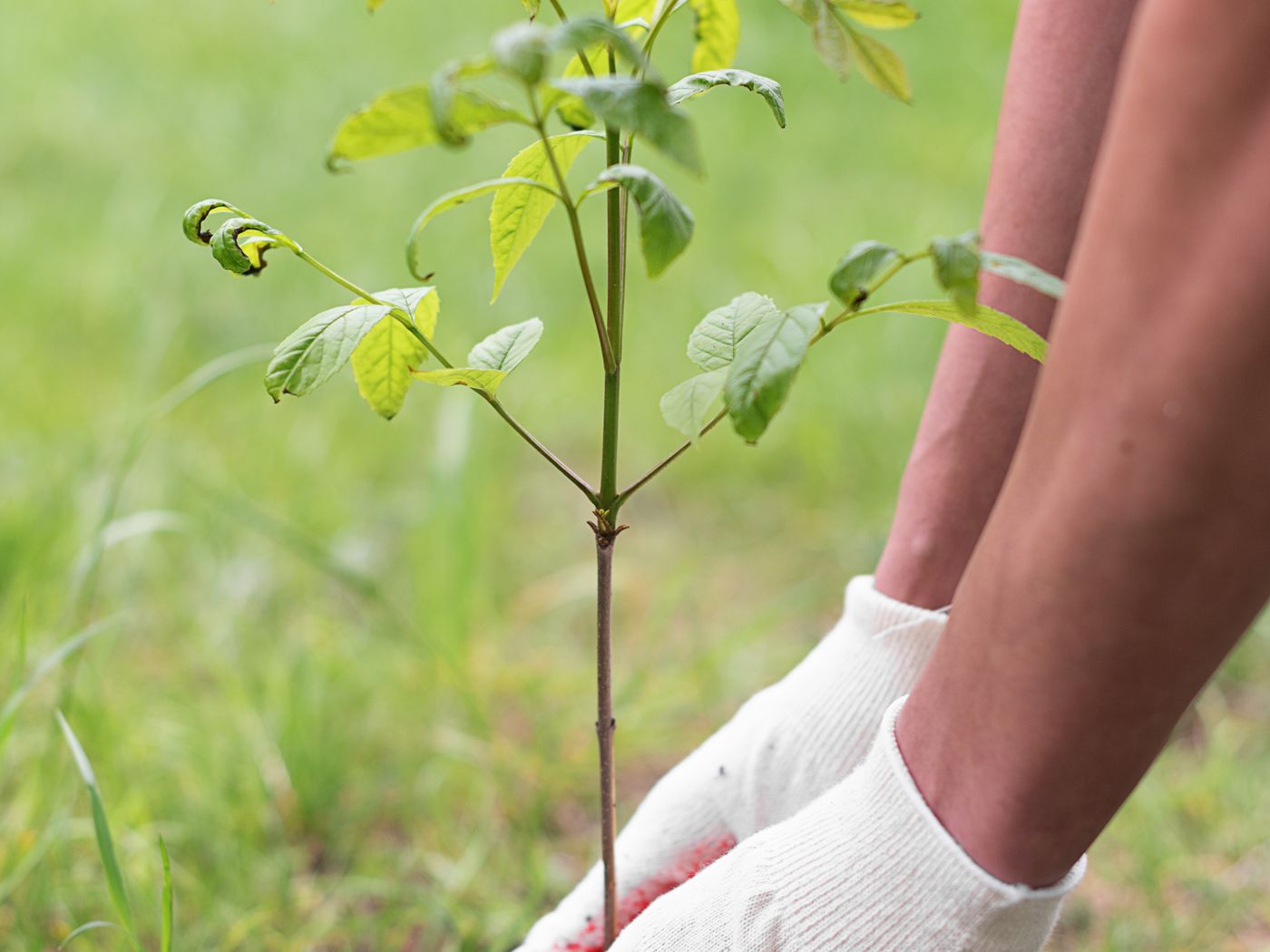
Hole preparation. We dig the hole 2-3 times wider than the root ball but no deeper. This is important. A common mistake is digging too deep, which causes the tree to settle below grade. The root flare (where the trunk meets the roots) needs to sit at or slightly above ground level. We also scarify the sides of the hole in clay soil to prevent the roots from circling inside a smooth-walled "pot."
Root inspection. Before the tree goes in the ground, we inspect the root ball. If the roots are circling (common in container-grown trees), we straighten them out or make vertical cuts to redirect growth. Circling roots can eventually girdle the trunk and kill the tree years after planting. It takes five minutes to fix at planting time and saves the tree's life.
Backfill and water. We backfill with the native soil from the hole. We don't add a bunch of amendments to the planting hole because that creates a boundary between amended and native soil that roots are reluctant to cross. We build a watering basin around the tree and give it a deep initial soak. We want the soil settled around the roots with no air pockets.
Mulching. A 3-4 inch layer of hardwood mulch goes around the base of the tree, extending out to the drip line or at least 3 feet from the trunk. We keep the mulch pulled back from the trunk itself. No "mulch volcanoes" where mulch is piled up against the bark. That holds moisture against the trunk and invites rot and insects.
Staking (when needed). Not every tree needs staking. If it can stand on its own, we leave it alone because some trunk movement actually stimulates stronger wood growth. For larger trees or windy sites, we use two stakes with flexible ties that allow some movement. Stakes come out after one year.
Your Watering Schedule After Planting
Watering is the single biggest factor in whether a newly planted tree lives or dies. More trees are killed by overwatering or underwatering in the first year than by any disease or pest. Here's the schedule we recommend for DFW:
Weeks 1-2: Water deeply every 2-3 days. Run a hose at the base of the tree on a slow trickle for 15-20 minutes. You want the water to soak down through the entire root ball, not just wet the surface.
Weeks 3-12: Water deeply once a week. Same approach: slow, deep soaking rather than a quick sprinkle. If it rains an inch or more during the week, you can skip that watering.
Months 4-12: Water every 10-14 days, depending on heat and rainfall. During July and August, you may need to water weekly again. Watch the tree for signs of stress like wilting or leaf curl, and water if you see them.
Year 2 and beyond: Most well-adapted species will be established enough to survive on rainfall alone by the second year, though supplemental watering during extended drought is always a good idea. Deep, infrequent watering is always better than shallow, frequent watering. You want those roots growing down, not camping out at the surface.
Post-Planting Care
Getting the tree in the ground is just the beginning. Here's what you need to know about taking care of your new tree in the first few years:
Don't fertilize at planting. Wait at least one full growing season before applying fertilizer. The tree needs to establish roots first, and fertilizer pushes top growth at the expense of root development. After the first year, a slow-release fertilizer applied in early spring works well for most species.
Don't prune right away. The tree needs every leaf it has to produce energy for root growth. Wait at least one year before doing any pruning, unless you need to remove a broken or dead branch. After the first year, you can start structural pruning to develop a good branch framework.
Watch for pests and disease. Newly planted trees are stressed, and stressed trees attract problems. Keep an eye out for unusual leaf spots, wilting, discoloration, or insect activity. Catching issues early makes them much easier to treat.
Refresh mulch annually. Mulch breaks down over time, which is actually a good thing because it adds organic matter to the clay soil. Top it off each spring to maintain that 3-4 inch depth. Keep it away from the trunk.
Trees to Avoid in DFW
Just as important as knowing what to plant is knowing what not to plant. Some trees that are sold at local nurseries and big box stores are poor choices for this area:
Bradford Pear. They look nice for about 10 years, then they split apart in storms. They're also invasive, cross-pollinating with other Callery pear varieties and spreading into natural areas. Many cities are starting to ban them. Skip it.
Silver Maple. Fast growth sounds appealing until you realize the wood is soft and brittle. Silver Maples drop branches constantly, have aggressive surface roots that crack driveways and sidewalks, and they're a liability in storms. There are much better options.
Arizona Ash. These grow fast and die young. They're susceptible to borers, decline quickly, and rarely live past 25 years in DFW. You'll end up paying for removal about the time you should be enjoying a mature shade tree.
Cottonwood. Beautiful, fast-growing trees that belong along creek banks, not in residential yards. The cotton they produce is a massive nuisance, the roots are incredibly invasive, and the wood breaks easily. Plant one if you want to clog your pool filter and annoy your neighbors.
Why Have Us Plant Your Trees
You can buy a tree at a nursery and plant it yourself. Plenty of people do. But there are real advantages to having professionals handle it:
We source quality trees. Not every tree at the garden center is worth planting. We know what to look for in terms of root structure, trunk form, and overall health. We also have access to wholesale nurseries with better selection and healthier stock than what you'll find at retail.
We know the local conditions. We've been planting trees across Arlington, Dallas, Fort Worth, Keller, Southlake, McKinney, Frisco, Allen, Plano, and Flower Mound for years. We know which species do well in which neighborhoods, and we can anticipate problems based on local soil and drainage patterns.
We guarantee our work. If a tree we plant doesn't make it through the first year (and you've followed the watering schedule), we replace it. That's peace of mind you don't get planting on your own.
Frequently Asked Questions
Fall is the ideal window, specifically October through early December. The heat has broken, but the soil is still warm enough for root growth. Trees planted in fall get several months of root establishment before they have to deal with summer heat. Late winter (February through early March) is also a solid planting window. We avoid planting in June, July, and August whenever possible because the heat stress makes establishment much harder on the tree.
Live Oak, Cedar Elm, Bur Oak, Shumard Red Oak, Pecan, and Crape Myrtle are all excellent choices. They handle our heat, tolerate clay soils, and are well-adapted to the DFW climate. The best pick for your property depends on how much space you have, your sun exposure, soil conditions, and what you want the tree to do (shade, screening, aesthetics). We're happy to walk your property and make recommendations.
It depends on the species and size. A 15-gallon container tree (about 6-8 feet tall) typically runs $200-$400 installed, including the tree, delivery, planting, mulching, and watering setup. Larger specimens in 45-gallon or 65-gallon containers cost more but give you a bigger head start. We provide free estimates and can work with a range of budgets.
For the first two weeks, water deeply every 2-3 days. Weeks 3 through 12, water deeply once a week. After three months, taper to every 10-14 days depending on heat and rainfall. The key is deep, slow soaking rather than quick surface watering. You want the moisture to reach the bottom of the root ball so roots grow downward. We provide detailed watering instructions at planting.
Yes. We stand behind our work with a one-year guarantee on trees we supply and install. If the tree fails to establish within the first year and you've followed the recommended watering schedule, we'll replace it at no charge. We provide written care instructions at planting so you know exactly what the tree needs to thrive.
Serving Every DFW Community
Green Image provides this service across the Dallas–Fort Worth metroplex. Find local tree care in your city: