Is Your Tree a Safety Hazard? Warning Signs
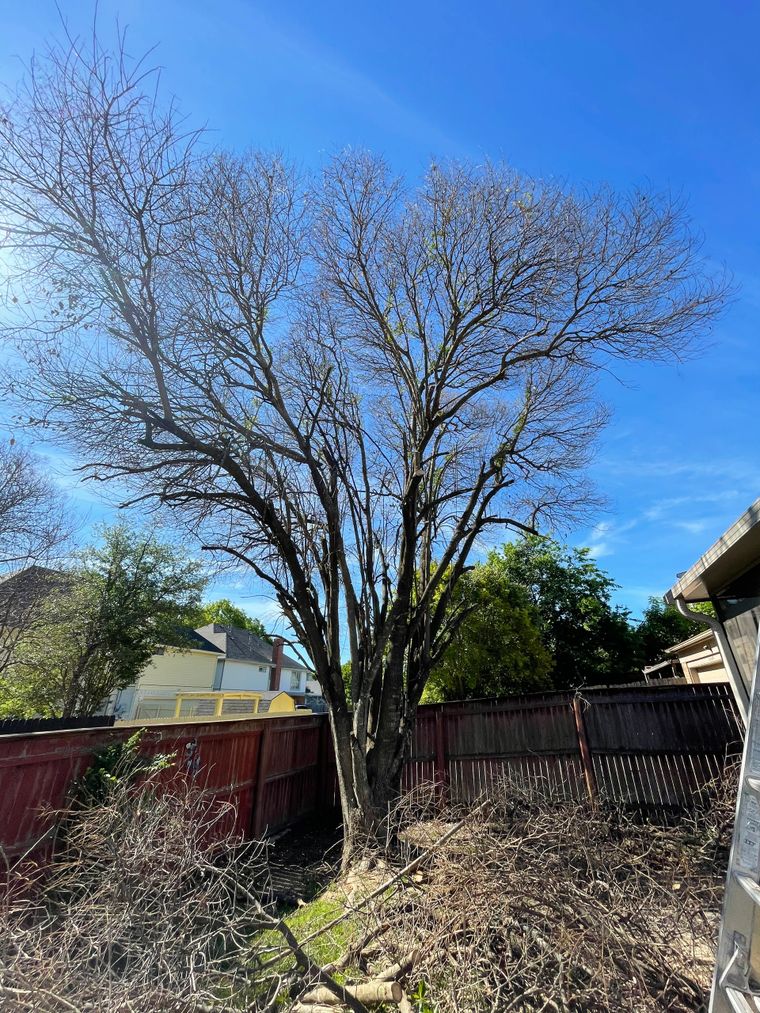
Trees are one of the most valuable features of any DFW property, providing shade, beauty, and increased home value. But when a tree becomes structurally compromised, it can quickly turn from an asset into a serious liability. Falling trees and limbs cause millions of dollars in property damage across North Texas every year, and severe weather events like the storms common in our area can turn a weakened tree into a dangerous projectile. Knowing the warning signs of a hazardous tree can help you take action before someone gets hurt or your home sustains major damage.
Leaning Trunk
While some trees naturally grow at a slight angle, a sudden or progressive lean is a major red flag. If a tree that has always stood straight begins to lean, it often indicates root failure on one side -- the roots are losing their grip in the soil, and the tree is at risk of toppling. Look for soil heaving or cracking on the side opposite the lean, exposed roots lifting out of the ground, or a gap forming between the root flare and the soil. In the DFW area, our expansive clay soils make this problem particularly common. During extended dry periods, the clay shrinks and pulls away from root systems, reducing their anchorage. Then when heavy rains return, the saturated soil provides even less stability. A leaning tree near a home, driveway, or area where people gather should be evaluated by an arborist immediately.
Cracked or Split Branches and Trunks
Cracks in major limbs or the main trunk compromise the structural integrity of the tree. Deep vertical cracks, especially those that extend through the trunk, indicate the tree may be splitting apart under its own weight. V-shaped crotches, where two trunks or major limbs grow at a tight angle with included bark between them, are structurally weak and prone to failure. This is extremely common in Bradford pears, silver maples, and certain oaks found throughout DFW neighborhoods. After ice storms or high wind events, inspect your trees carefully for new cracks or splits. Even if the tree appears to recover, a crack that has formed will not heal -- it will only worsen over time.
Dead Branches and Hanging Limbs
Dead branches -- sometimes called "widow makers" in the tree care industry -- are one of the most immediate hazards a tree can present. Dead wood is brittle and can break off without warning, even on a calm day. Look for branches with no leaves during the growing season, bark that is falling off to reveal dry gray or brown wood underneath, and smaller dead twigs accumulating on the ground beneath the tree. Hanging or partially broken branches that are caught in the canopy are especially dangerous, as they can dislodge at any time. These situations call for prompt removal by a professional with the proper equipment and training to work safely at height.
Root Damage and Soil Changes
A tree's root system is its foundation, and any damage to the roots directly affects stability. Common causes of root damage in DFW include construction projects that cut through root zones, grade changes that bury roots or expose them, soil compaction from heavy equipment or foot traffic, and severed roots from trenching for utilities or irrigation. If you have recently had construction work near a large tree and notice the canopy thinning, leaves wilting, or the tree beginning to lean, root damage is the likely cause. Mushrooms or fungal growth at the base of the tree also signal root decay. An arborist can perform a root crown excavation to assess the extent of the damage and determine whether the tree can be saved or needs to be removed.
Cavities and Hollow Trunks
Large cavities or hollow areas in the trunk reduce the tree's structural strength. While trees can sometimes survive with internal decay -- the living tissue is in the outer layers -- a large cavity in combination with other risk factors significantly increases the chance of failure. Cavities that collect water can accelerate internal rot, and those located on the side of a lean are especially concerning. An arborist can use specialized tools such as a resistograph or sonic tomograph to map the extent of internal decay and calculate whether the remaining sound wood is sufficient to support the tree's weight and withstand wind loads typical of our area.
If you have identified any of these warning signs on your property, do not wait for the next storm to find out if your tree is safe. A professional tree risk assessment from a professional arborist provides a clear evaluation of the hazard level and your options for mitigation, whether that means strategic pruning, cabling and bracing, or removal. Green Image Tree Service offers free consultations throughout the DFW Metroplex.
Concerned About a Hazardous Tree?
Our arborists provide thorough risk assessments and same-day emergency response.
Get a Free Estimate